
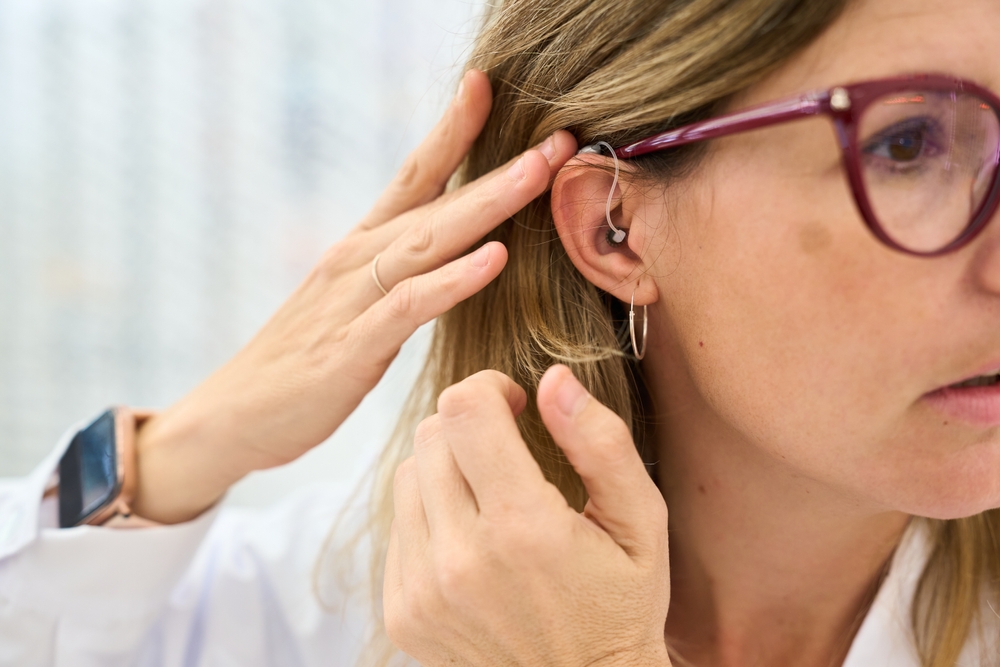
A primary reason individuals put off addressing auditory deficits is the assumption that assistive devices will be unsightly or awkward to wear. And that’s completely understandable! Regrettably, some people even experienced social alienation because acquaintances falsely assumed that wearing a visible aid signaled a complete inability to comprehend spoken dialogue.
This obsolete perception remains deeply embedded in the public consciousness, creating a massive barrier to proactive treatment. The liberating truth is that twenty-first-century auditory tech offers a level of cosmetic elegance and physical comfort that surprises most patients. Thanks to rapid technological evolution, modern devices are remarkably downsized, highly ergonomic, and exceptionally covert.
If you have spent years avoiding an audiologist due to the appearance of old devices, now is the perfect moment to explore today’s sleek alternatives!
Why the Bulky, Obvious Hearing Aid Is a Thing of the Past
If you close your eyes and picture a hearing aid, you might imagine something large, hooked over the ear, and visible from across the room. Should that be your current expectation, you are inadvertently recalling the clunky designs common to the 1980s and 1990s.
Since that era, the manufacturing landscape for hearing solutions has completely transformed. Continuous refinements in ergonomic styling, nanometer-scale circuitry, and digital audio engineering have radically overhauled the modern cosmetic profile. Today’s instruments are profoundly smaller, remarkably streamlined, and strategically engineered to blend flawlessly into your natural anatomy or vanish altogether.
A substantial percentage of contemporary options reside deep within the auditory canal, ensuring absolute invisibility during routine face-to-face interactions. Alternative styles occupy a tiny footprint behind the pinna, utilizing ultra-light materials and customizable color palettes to match hair or skin tones perfectly.
A Taxonomy of Modern Styles: From Totally Hidden to Ultra-Streamlined
For those investigating what these advanced acoustic tools look like in real life, consider this straightforward guide:
The Invisible-in-Canal (IIC) Form Factor
This specific configuration offers the highest degree of user discretion. Engineered to rest deep inside the ear canal, IIC systems are individually molded to match the precise contours of your ear. Spoken interactions at arm’s length occur without anyone realizing a medical device is present. This configuration is highly favored by individuals managing mild-to-moderate auditory drops who demand total aesthetic secrecy.
Receiver-in-Canal (RIC) and Receiver-in-the-Ear (RITE) Designs
This particular layout has become the benchmark standard for contemporary hearing health restoration. The system utilizes an incredibly small housing resting behind the ear, linked by a hair-thin translucent cable to a miniature speaker within the ear pathway. To a casual observer, their clean lines often mimic high-end commercial wireless earbuds. Most people won’t notice them unless they’re looking.
Behind-the-ear (BTE)
This style positions the main component body post-auricularly, offering a slightly larger footprint that remains beautifully sculpted and sleek. They are typically prescribed to resolve advanced levels of hearing impairment, generating exceptional sound amplification without the cumbersome weight users traditionally dread.
Ultimately, contemporary hearing aids are built to empower your daily routine rather than broadcast a medical condition to the world.
Advanced Features: Beyond Aesthetics to Smart Technology Integration
The changes in modern hearing aids aren’t just cosmetic. Today, they function more like smart devices than traditional medical equipment. Most current systems boast universal wireless syncing, channeling smartphone calls, high-definition music, and television broadcasts directly to your internal receivers.
Most come with smartphone apps, so you can adjust volume or switch settings without ever touching the device. Say you’re walking into a noisy restaurant: You can fine-tune your hearing to match the environment in seconds. Rechargeable batteries have also replaced the tiny ones people used to struggle with. Just place them on a charger overnight, like your phone.
Empowerment Over Hesitation: Redefining Hearing Health Care
Even with this encouraging information, taking the initial step toward treatment can induce anxiety. Scheduling an appointment can feel like a profound internal challenge because it represents an open admission of sensory alteration. This can make us feel helpless and like we aren’t fully in control of what’s happening to our bodies.
Consider a healthier perspective: wearing a contemporary hearing system does not mean your body has failed you. They’re simply a sign of change, which happens to us all. They’re proof that you’re taking action to support and equip your body in essential ways.
Picture yourself wearing an ultra-low-profile, virtually invisible instrument that allows you to effortlessly decode rapid speech, thrive in complex soundscapes, and re-engage with your favorite hobbies. Talk about empowering!
See For Yourself What Today’s Hearing Aids Look Like
The easiest way to let go of that outdated mental image is to check out for yourself what’s available. Our clinical team cordially invites you to visit our facility, interview our staff, and evaluate different form factors in a stress-free, zero-obligation environment. Think of your visit as an educational open-house to experience the lightweight engineering of modern hearing instruments firsthand.
Almost every visitor walks out completely shocked by how weightless, ergonomic, and cosmetically invisible these tools are in practice! Do not let outdated myths delay your wellness—call our specialized practice or book your appointment online today.