
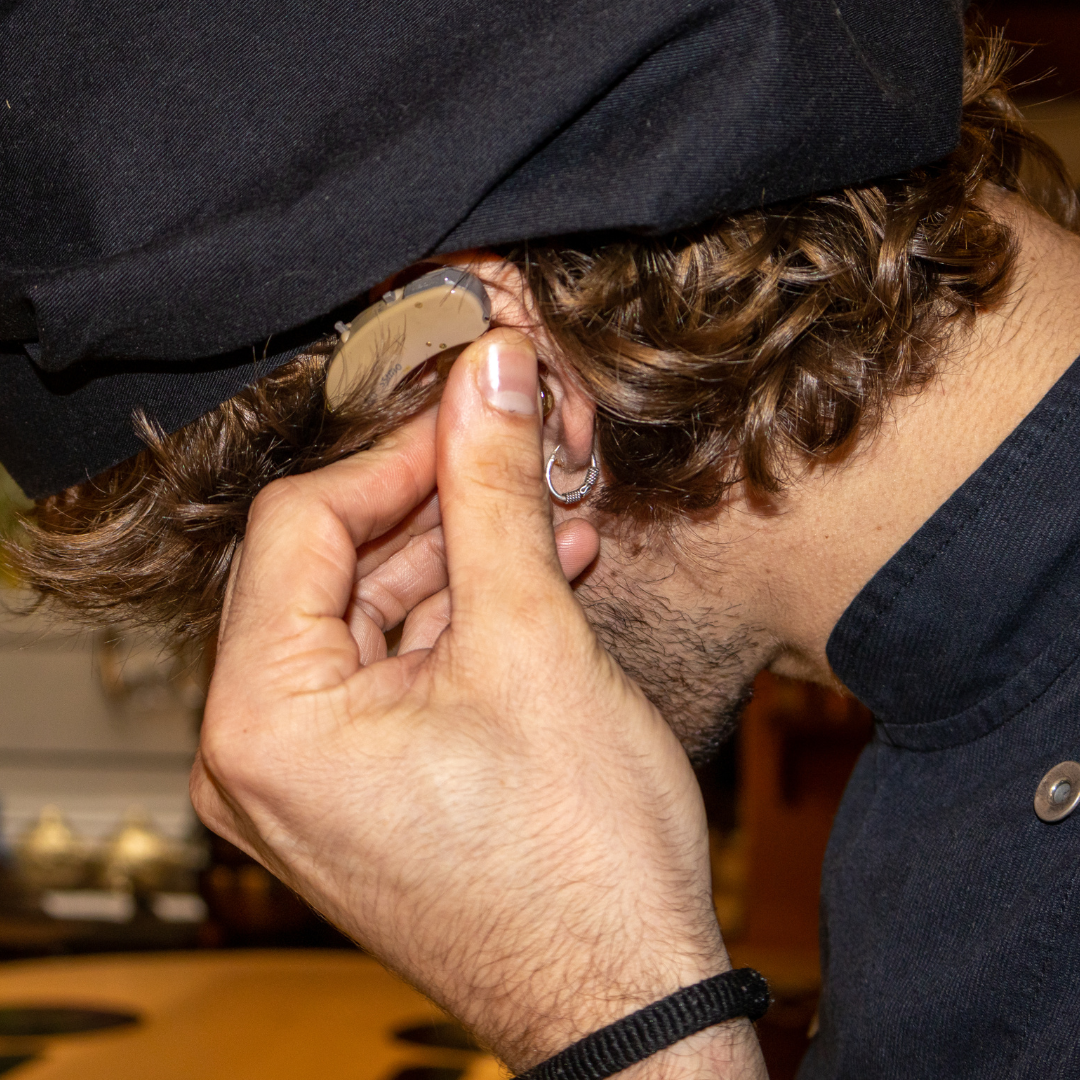
Restaurant conversations can be difficult to follow when environmental noise competes with your focus and hearing. Our specialists can evaluate hearing under both calm and noisy listening conditions to establish why noisy rooms present such difficulty. After diagnosing the source of your difficult hearing, we design targeted interventions tailored to your listening needs.
How Can Hearing Seem Normal at Home but Fail in a Restaurant?
In quiet conditions, an optimal signal-to-noise ratio ensures that the desired speaker sounds markedly clearer than surrounding sound. Restaurants create the opposite situation. Background voices, loud music, service clatter, and wall reflections collide with spoken words, demanding heightened cognitive processing to isolate individual speech.
These auditory struggles commonly accompany untreated high-frequency hearing loss, central processing delays, or presbycusis. Factors including listening fatigue, poor dining lighting, acoustic distance, and wandering attention make comprehension significantly harder. Some people have normal results on a basic hearing test but still perform poorly on speech-in-noise testing. Experiencing speech-recognition struggles in noisy dining venues warrants a formal audiological evaluation regardless of seemingly normal quiet hearing.
How Is High-Frequency Hearing Loss Diagnosed?
We initiate evaluation by exploring challenging acoustic environments, acoustic trauma history, subjective tinnitus, prescription drug profiles, and unilateral ear changes.
Clinical pure-tone audiometry identifies hearing threshold levels across various frequencies by delivering sounds through air and bone pathways. In high-frequency hearing loss, the audiogram reveals a sloping configuration where hearing acuity drops progressively as pitch frequencies increase. Supplementary assessments routinely include diagnostic tympanometry to analyze middle-ear status alongside word-recognition testing to determine speech clarity.
Standard quiet test booths fail to simulate real-world restaurant noise, making speech-in-noise testing a crucial clinical tool. This diagnostic protocol measures your capacity to understand target words or sentences against progressively louder multi-talker babble. Combined, these clinical findings determine whether your symptoms stem from acoustic audibility, word clarity, central noise filtering, or multifactorial causes.
Auditory Processing Disorders: Impact on Adult Communication
A central auditory processing disorder disrupts the neurological transmission and cognitive interpretation of sound waves. While peripheral ears may register soft tones normally, the auditory cortex struggles to filter competing noise, resolve phonetic contrasts, or keep pace with rapid conversation. We first rule out peripheral sensorineural deficits before deciding whether a dedicated auditory-processing test protocol or specialist referral is indicated.
Effective Techniques to Hear Better in Noisy Surroundings
Targeted behavioral changes optimize the acoustic speech signal reaching your auditory system while providing clear visual context. Prior to dining, choose venues known for lower noise levels or schedule meals during quieter dining hours. Restaurants featuring plush booths, wall acoustic panels, heavy drapery, carpeting, and sound-dampening materials provide superior listening compared to open rooms with reflective surfaces.
Practical seating strategies in the dining room:
- Request a table away from the kitchen, bar, speakers, and large groups.
- Position your chair against a perimeter wall to diminish competing auditory chatter behind your head.
- Face your speaking partners directly in well-illuminated seating to maximize visual speech cues.
- Keep the distance between speakers as short as comfortably possible.
- Place your better-hearing ear toward the person you most want to hear.
- Ask speakers to reword the specific phrase you missed rather than repeating their initial wording.
- Actively confirm key information rather than smiling and guessing at ambiguous dialogue.
- Take brief listening rests outside or in quiet hallways when mental fatigue emerges.
- Ask companions to speak clearly at a natural pace.
- Elevated yelling distorts auditory signals and seldom improves actual phonetic comprehension.
Assistive Hearing Tools and Technology for Complex Acoustic Environments
The best technology depends on the cause of the difficulty, the listening environment, and whether hearing loss is present. Professionally fitted hearing aids may use directional microphones, digital noise reduction, and dedicated restaurant programs to emphasize speech from the front and reduce some competing sound. Realistic expectations are vital, since even advanced hearing devices cannot completely erase background conversational chatter.
Pairing your devices with a remote wireless microphone generates a substantial improvement in the direct signal-to-noise ratio. Positioned near or clipped to the speaker, the device transmits raw speech audio directly to paired hearing aids or external listening receivers. This reduces the effects of distance and surrounding noise.
Supplementary auditory solutions include:
- Portable table microphones for managing multi-speaker dinner conversations
- Built-in telecoils linking directly with induction hearing-loop systems in public venues
- Smartphone speech-to-text or live-captioning applications
- Advanced hearables incorporating assistive directional listening programs
- Acoustic sound-meter apps and dining review directories that score restaurant noise
We can compare options, confirm compatibility, and teach you how to use the selected device.
The Clinical Role of Audiologists in Managing Loud Environments
A hearing evaluation can move the conversation beyond “I hear fine in quiet.” Our audiology team assesses the unique environments, speaking partners, and ambient noise profiles that challenge you to choose targeted diagnostic tools. Your diagnostic appointment may incorporate pure-tone air and bone thresholds, acoustic middle-ear testing, word-recognition scores, and speech-in-noise measures. Diagnostic auditory-processing testing may be recommended if your clinical symptoms and baseline evaluations suggest central auditory dysfunction.
Sudden unilateral hearing drops, acute asymmetric changes, or rapid auditory decline mandate evaluation by an ear, nose, and throat physician. Personalized care identifies the source of the difficulty rather than assuming restaurant noise is the only problem.
Request an Audiology and Hearing Evaluation Today
If restaurant conversations leave you guessing, withdrawing, or feeling exhausted, schedule a comprehensive hearing evaluation with us. We can evaluate targeted solutions to optimize your hearing in noisy environments using prescription hearing aids, assistive listening technology, or communication strategies tailored to you.
Contact our audiology office today to schedule your evaluation and move toward effortless, confident conversations.