
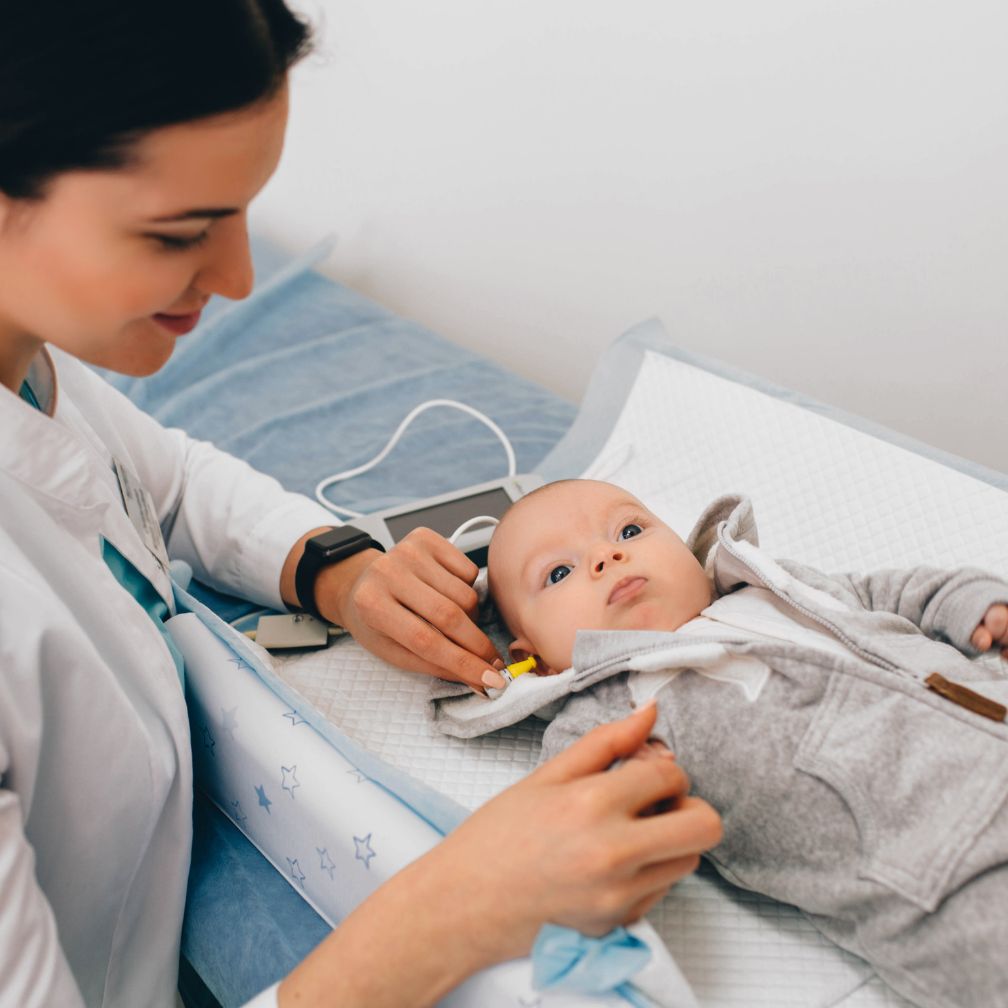
For guardians caring for an infant, recognizing that their infant suffers hearing impairment tends to spark heavy emotional dread. The encouraging message is clear: by utilizing early testing and supportive therapies, children with auditory issues will easily succeed. Clearly, such children consistently gain core language skills, social capabilities, and firm bonds with people in their lives, building toward a prosperous life!
Combining traditional hearing devices with specialized cochlear technology delivers two outstanding solutions for supporting infants who exhibit hearing loss. Below, we take a look at how these technologies function and how to decide which one is right for your child.
Grasping the Basics of Pediatric Hearing Loss
Auditory challenges in babies can originate from diverse medical influences, including:
- Spontaneous genetic variations (even within family trees missing hearing loss history)
- Prenatal viral exposures like cytomegalovirus (CMV) or rubella pathogens
- Physical birth-related trauma, such as neonate oxygen loss or early delivery
- Specific intensive care medications applied in dedicated neonatal care facilities
Which phase matters most? Rapid clinical confirmation. For this reason, infants in the United States receive standardized auditory screening prior to hospital discharge. Experienced pediatric audiologists strictly uphold the universal “1-3-6” care benchmark:
- Initial hearing check administered prior to 1 month of age
- Definitive hearing diagnosis confirmed by 3 months of age
- Formal intervention (deploying corrective equipment or speech habilitation) launched prior to 6 months of age
Meeting these milestones provides infants optimal opportunities for healthy speech, language, and brain development. If you need further clarity with these newborn checks, your pediatrician will be happy to help!
Deploying Hearing Aids for Newborns
Regarding babies diagnosed with mild to severe auditory loss, electronic hearing aids typically represent the preferred starting point. Specialized, ear-level instruments boost incoming speech signals, helping babies hear human speech and environmental sounds with far greater precision.
Customized infant hearing instruments operate as:
- Dermatologically and structurally safe for young infants aged just a few weeks
- Built with soft, flexible ear impressions that adjust seamlessly as the baby grows
- Equipped with child-resistant battery compartments and child-focused protective features
- Expertly configured by a pediatric audiology specialist to target your child’s distinct hearing prescription
During physical development, wearable hearing devices demand ongoing updates to maintain physical comfort and functional efficacy.
Cochlear Implants for Infants
In instances where an infant demonstrates profound sensorineural hearing impairment while showing insufficient progress with hearing aids, audiology teams frequently suggest a cochlear implant. Differing from standard hearing aids, cochlear implant systems:
- Must be placed via a specialized surgical procedure by an experienced otolaryngologist
- Safely bypass damaged hair cells across the inner ear system
- Transform acoustic energy into digital electrical impulses that stimulate the acoustic nerve directly
Precision-implanted cochlear devices remain:
- Formally FDA-cleared for infants aged 9 to 12 months and older
- Remarkably effective when combined with specialized rehabilitation and active household backing
- Prescribed solely following a thorough evaluation by an audiologist and ENT specialist
This evaluative framework encompasses temporal bone imaging, detailed hearing tests, and detailed consultations regarding anticipated long-term progress.
Comparing Hearing Aids and Cochlear Implants: Key Differences
- Mild to severe levels of impairment utilize Hearing Aids; Severe to profound hearing loss requires Cochlear Implants
- Non-Invasive external fitting: Hearing Aids; Surgical insertion required: Cochlear Implants
- Physical sound amplification: Hearing Aids; Direct conversion to electrical signals: Cochlear Implants
- Treatment starts in newborn infancy: Hearing Aids; Placement starts at 9-12 months: Cochlear Implants
Summary Thoughts: Supporting Your Child’s Hearing Journey
If your newborn faces a confirmed hearing impairment diagnosis, you have options and robust community resources exist to help you. With the help of pediatric hearing specialists, most children construct language capabilities completely equal to their hearing peers.
Whether your child is a candidate for hearing aids or cochlear implants, early action can make a lifelong difference.
Do you still have lingering questions regarding your infant’s auditory condition? Contact our staff today to obtain an exhaustive evaluation and custom-designed care plan.